

Your Shopping Cart
-
Your bag is empty
Catalog
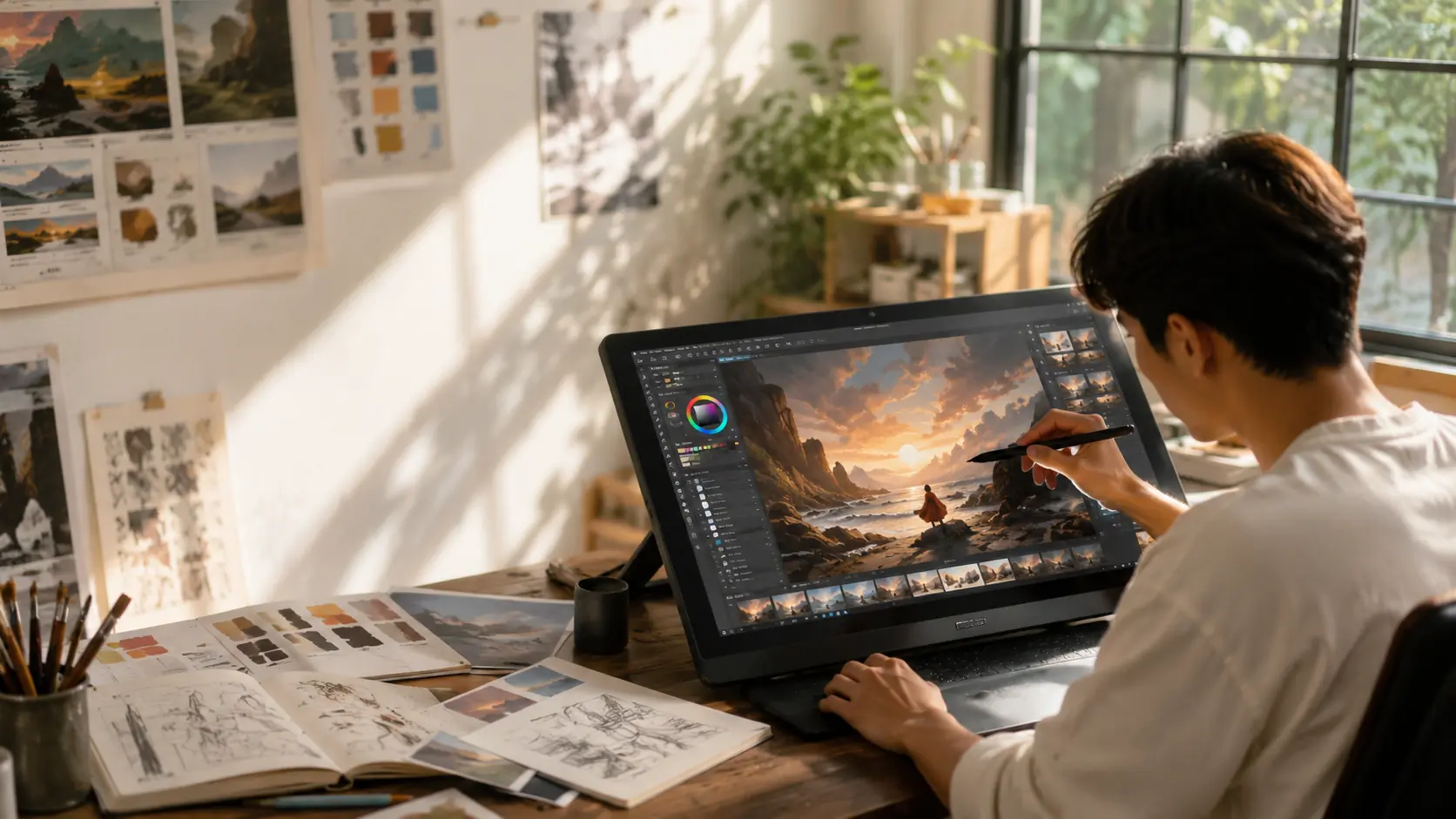
Digital Painting Fundamentals
The core techniques of digital painting: colour theory, light, composition, brush control and rendering. Worked examples take you from a blank canvas to a finished piece, at whatever pace suits you.
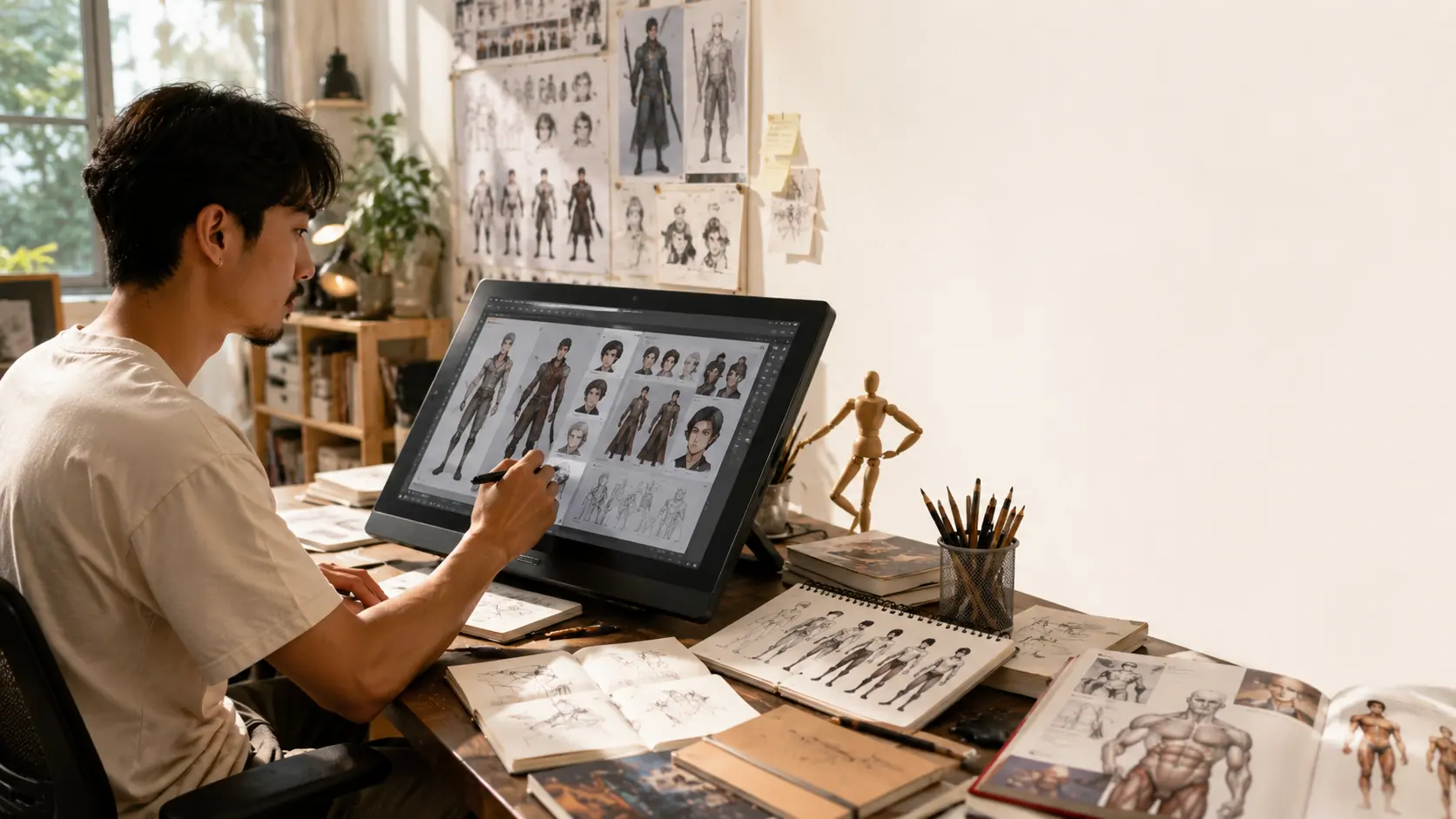
Character Design & Development
How a character is built: silhouette, proportion, costume, expression and the design decisions that make a figure readable at a glance.
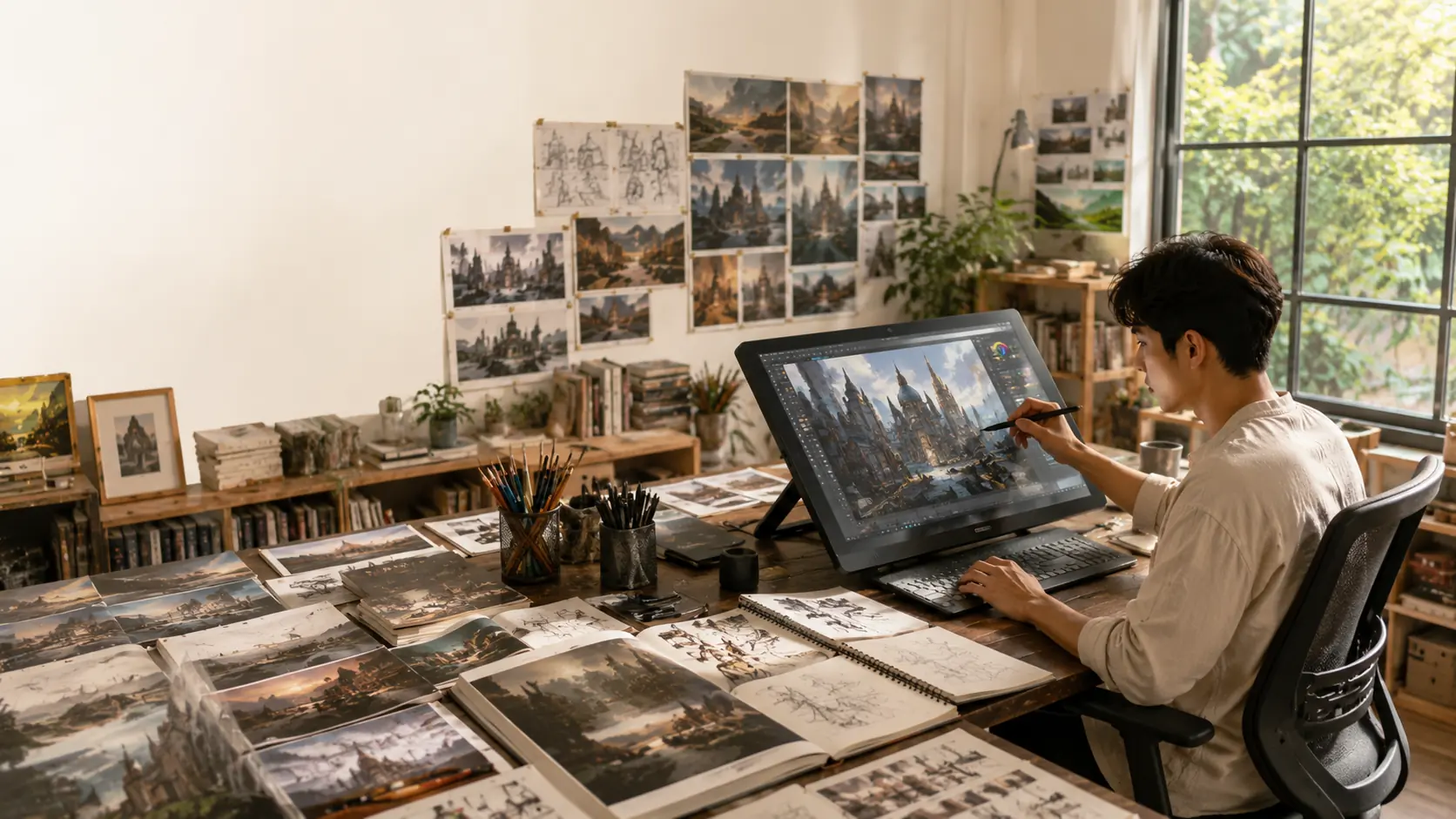
Environment & World Building
Designing places: landscape, architecture, atmosphere, scale and the visual logic that makes an imagined world feel like it could exist.
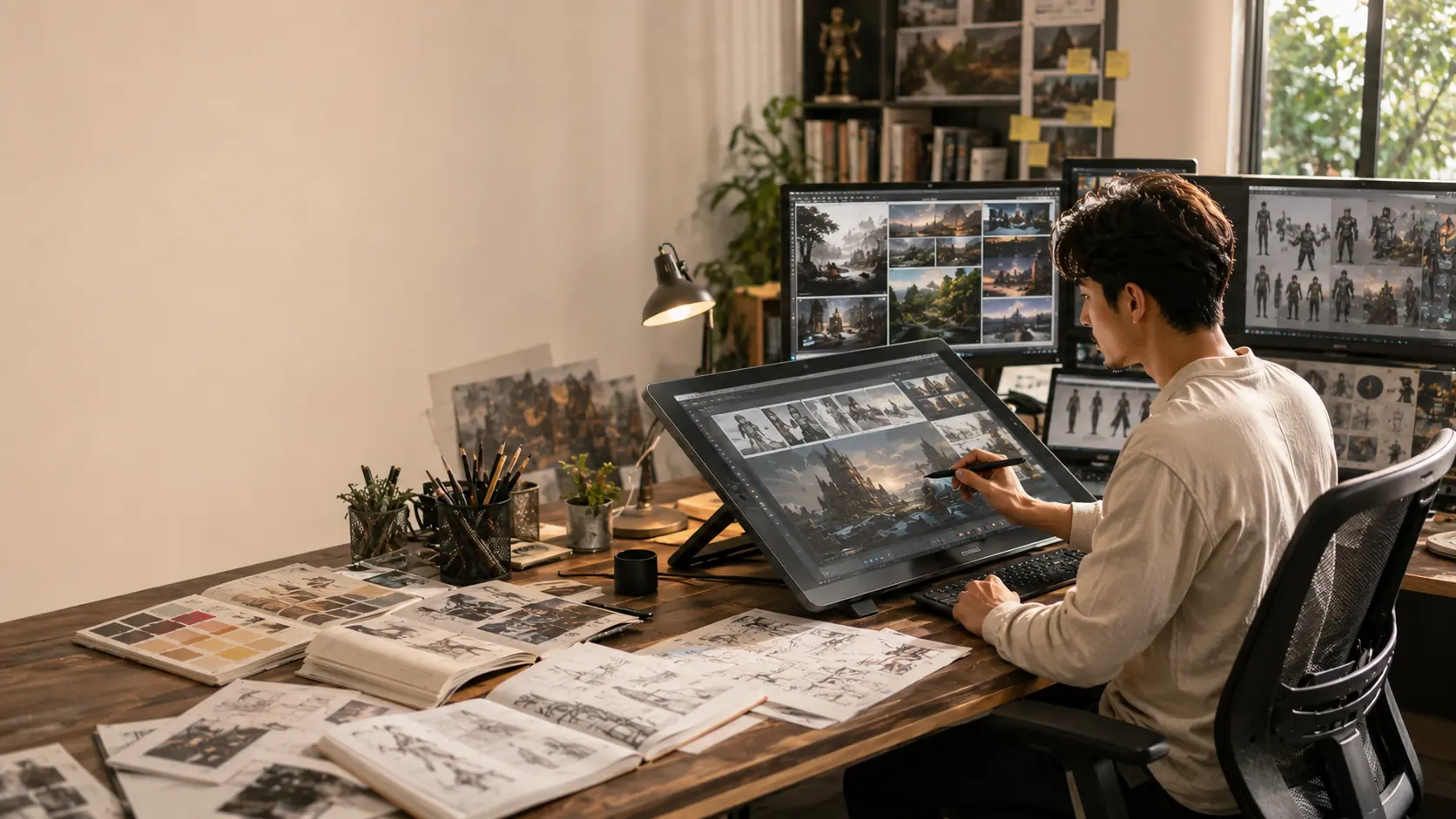
Professional Concept Art Production
The working methods behind production concept art: reading a brief, thumbnailing quickly, iterating on feedback, and presenting a design clearly enough to be built from.
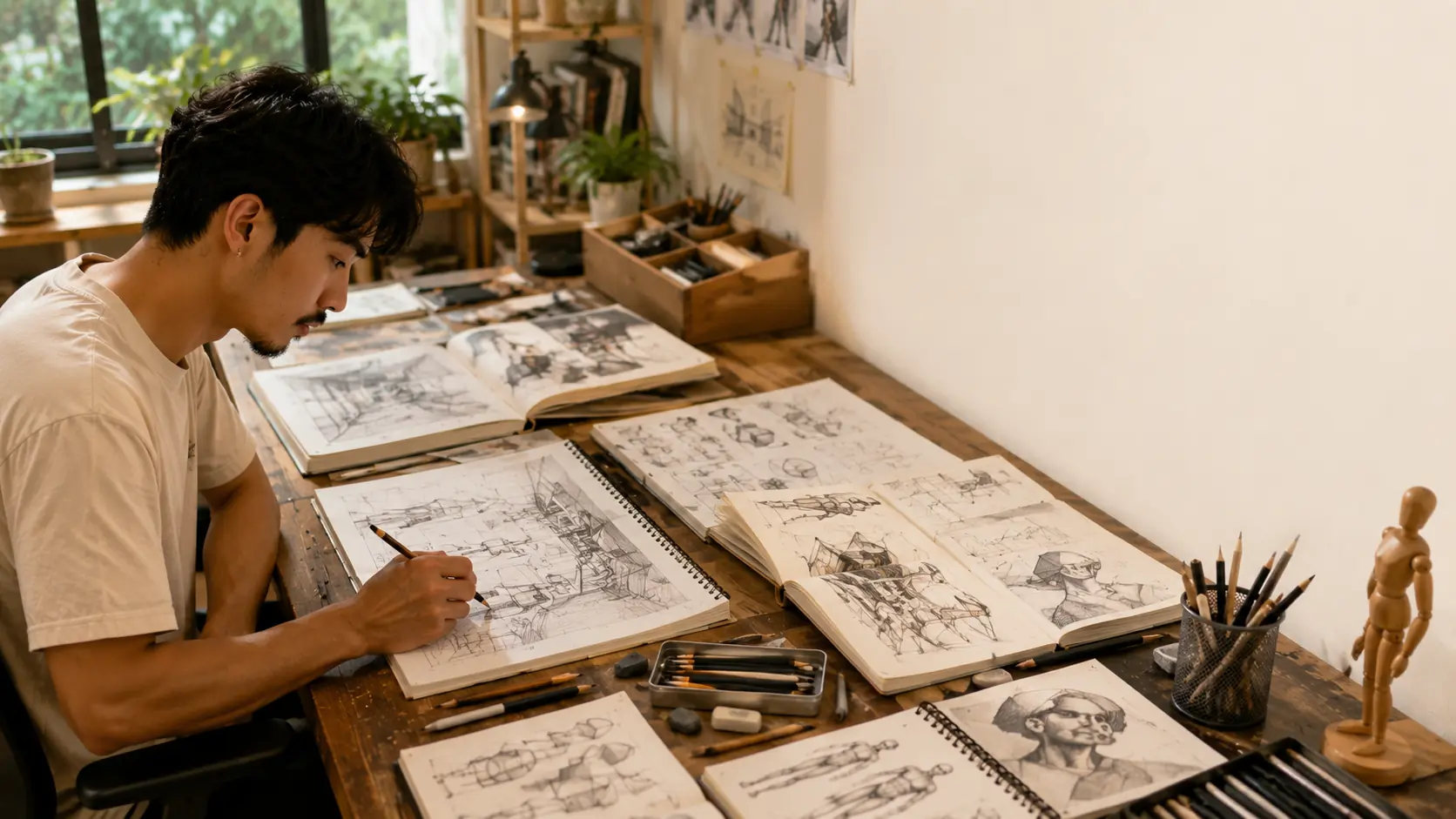
Drawing & Sketching Mastery
Line, form, proportion and tone, worked through with the kind of steady, repeated practice that builds a reliable hand.
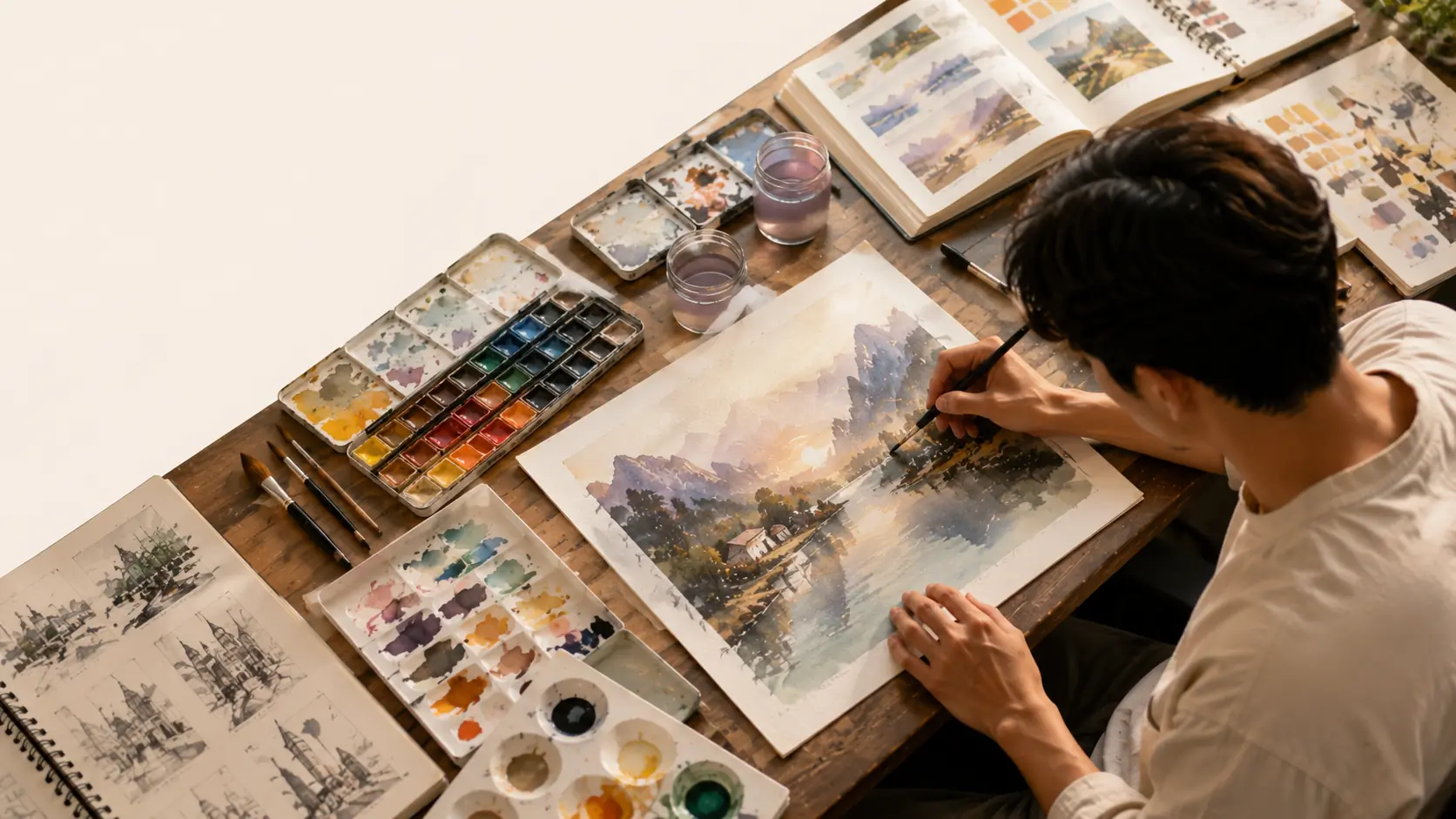
Watercolour Techniques
Washes, wet-in-wet, glazing and lifting, and the control of water and pigment that watercolour asks for.
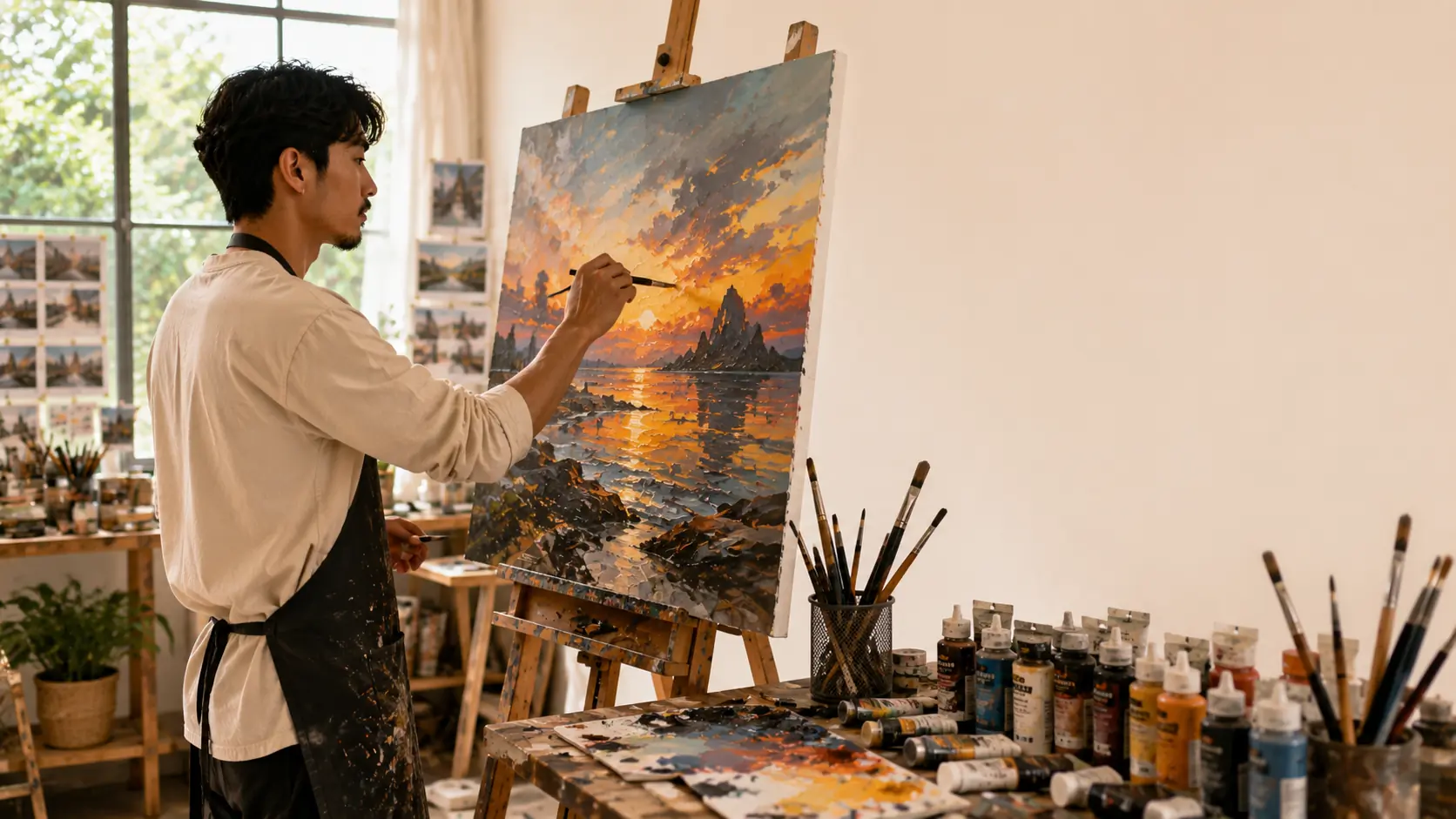
Acrylic Painting Studio
Working in acrylic: layering, blending in a fast-drying medium, texture, the use of mediums, and mixing colour that stays true as it dries.
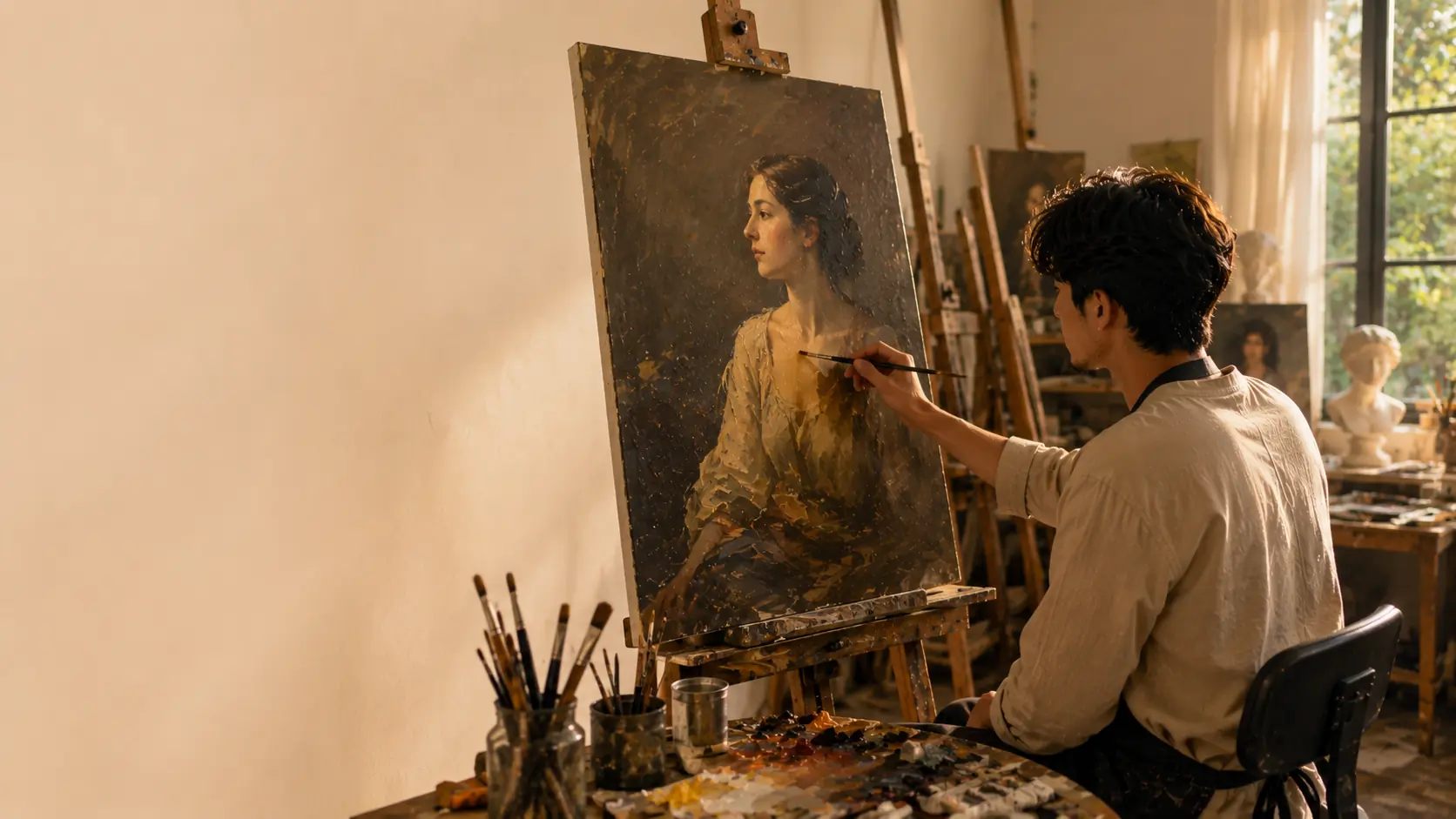
Oil Painting Professional Series
Oil painting in depth: underpainting, fat over lean, glazing, alla prima, palette control and bringing a picture to a considered finish.
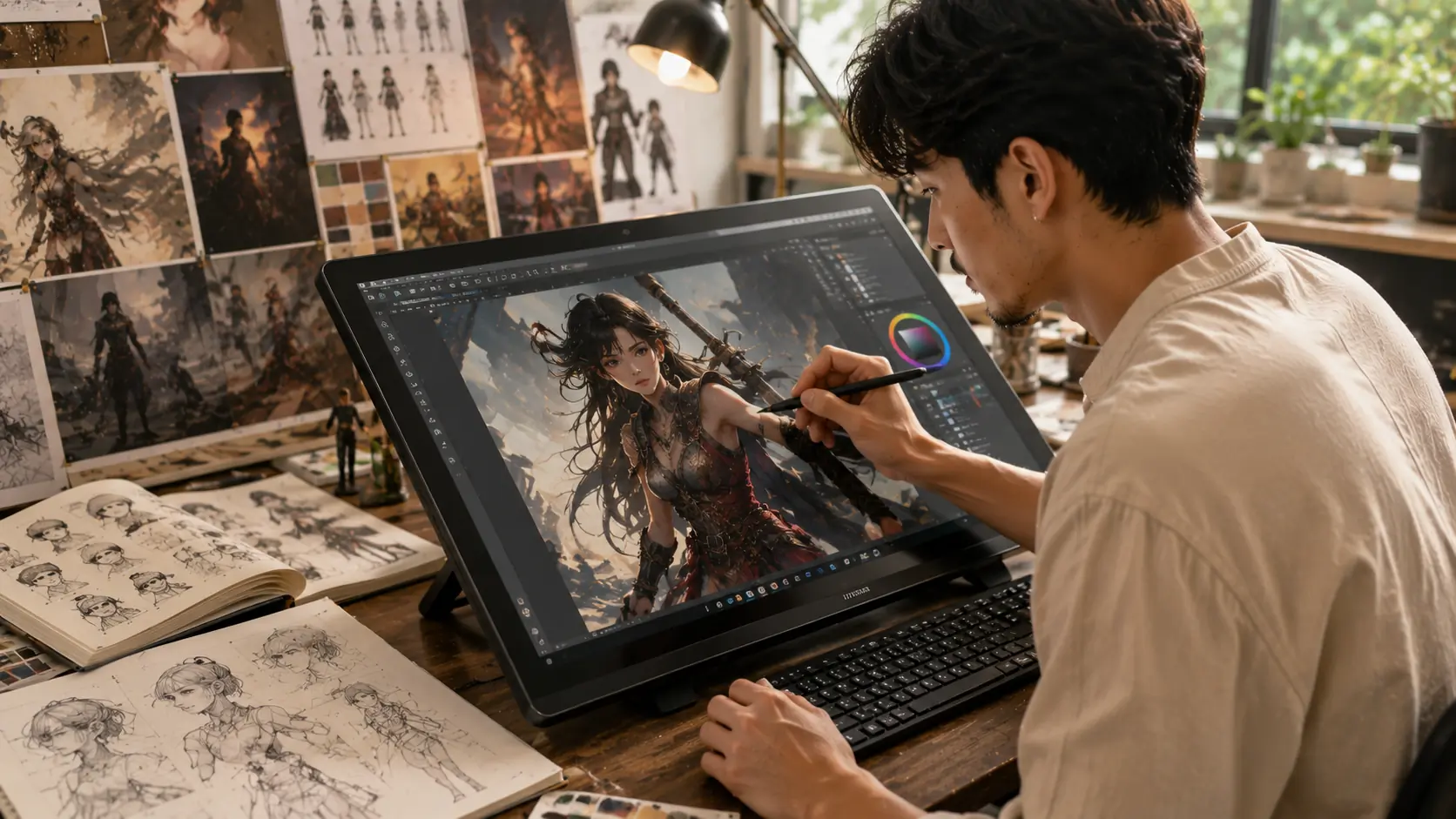
Character Illustration
Taking a character from a design sheet into a finished illustration: pose, staging, lighting, colour and telling a story in a single image.
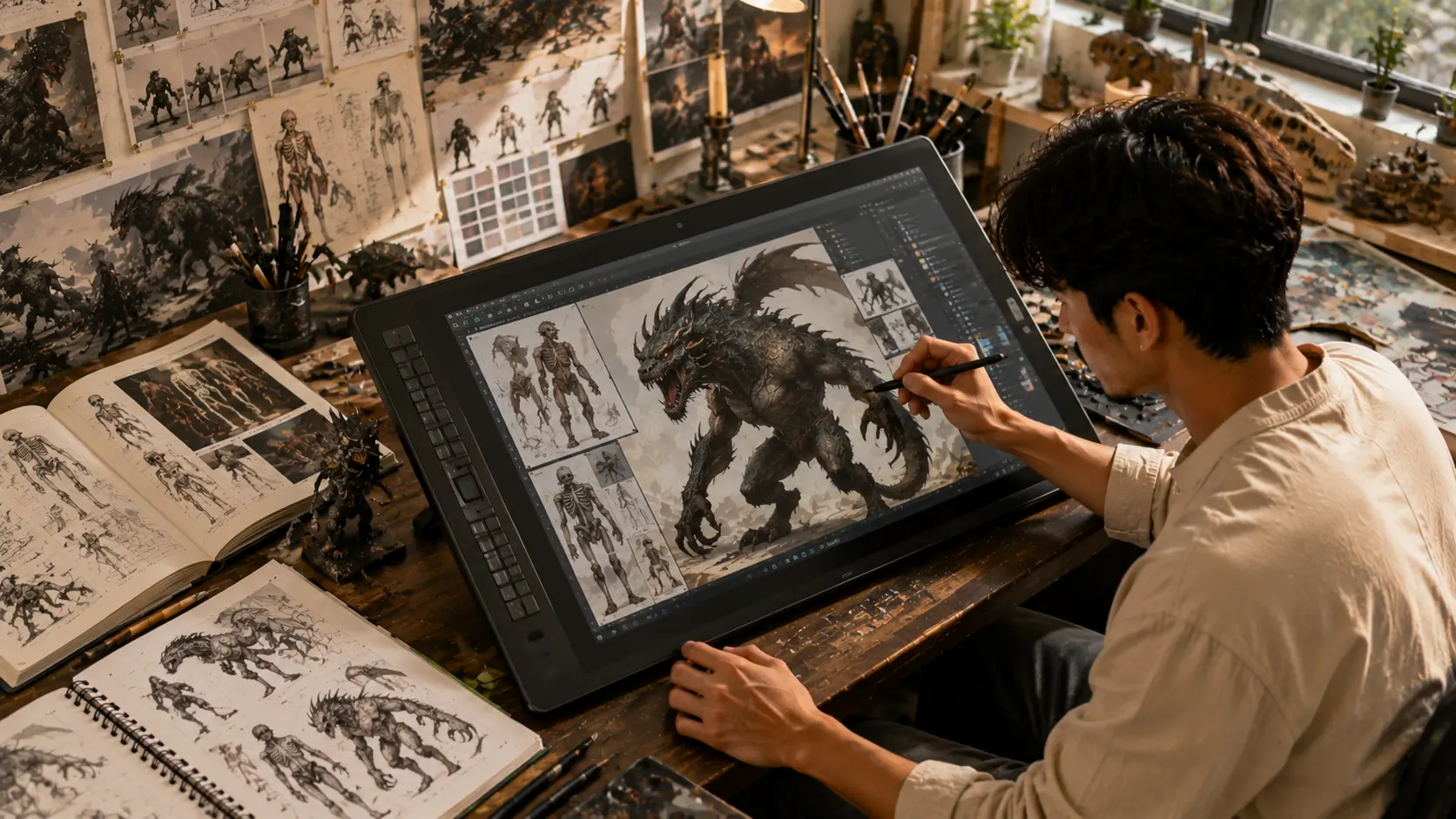
Creature & Monster Design
Designing creatures that convince: real anatomy as a starting point, silhouette, scale, texture and adaptations that look like they evolved.
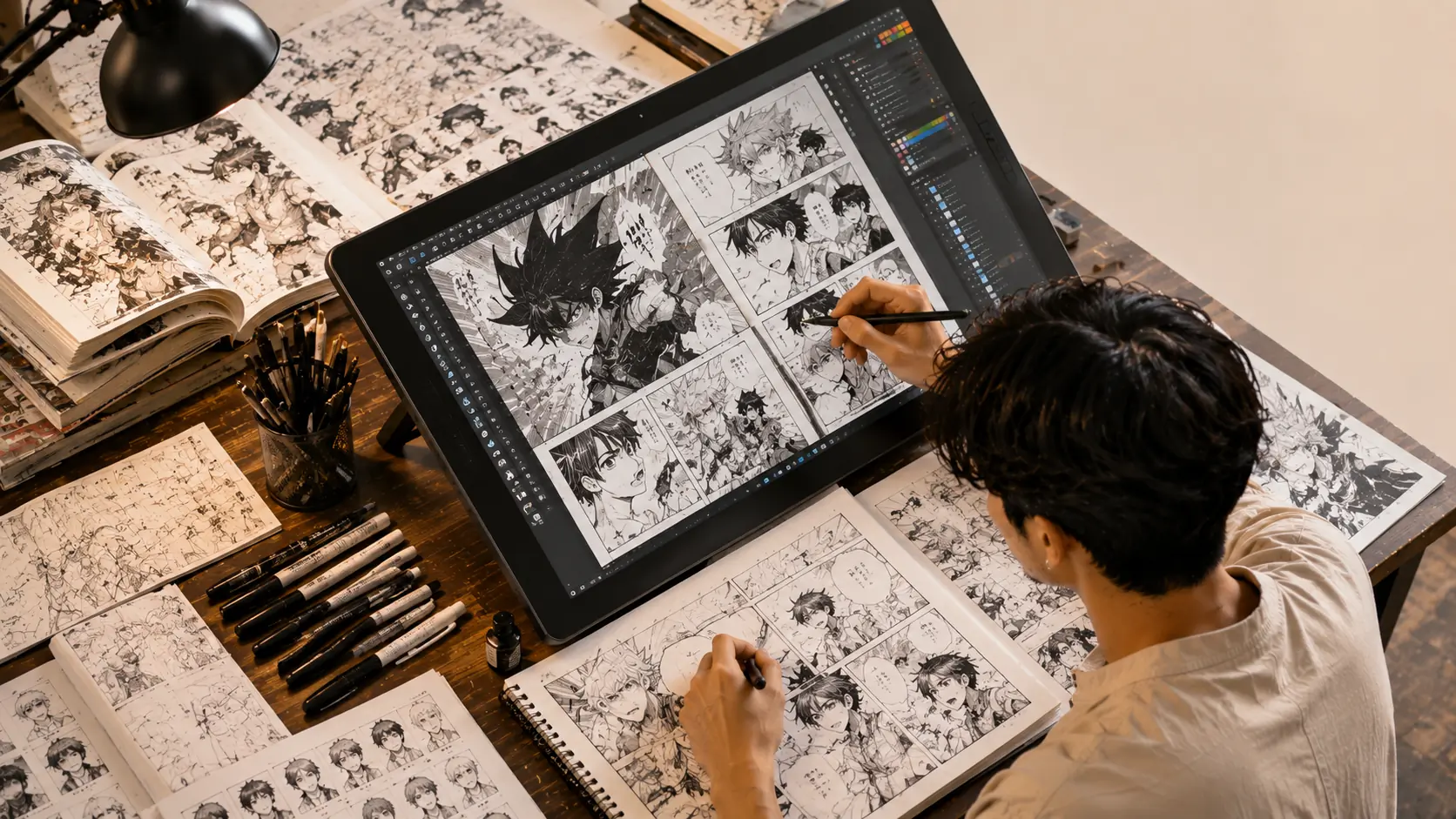
Comic & Manga Art
Panels, pacing, perspective, inking, tone and lettering, and how a page carries a reader from one moment to the next.
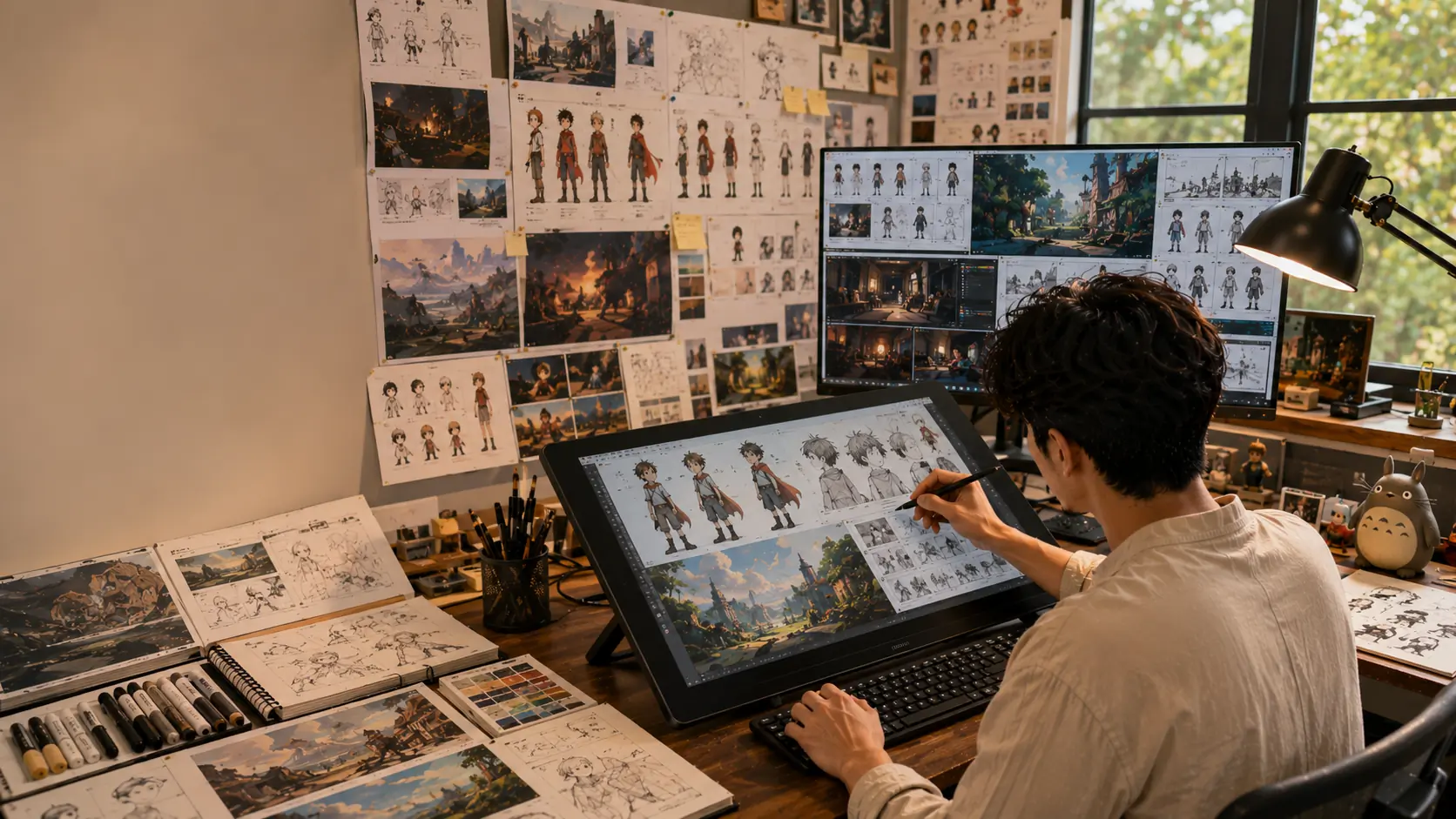
Animation Concept Design
Design for movement: model sheets, expression and pose libraries, colour scripts, and keeping a character consistent across every shot.

Graphic Design Fundamentals
Typography, hierarchy, grids, colour and layout, and how the arrangement of a few elements decides what a reader sees first.
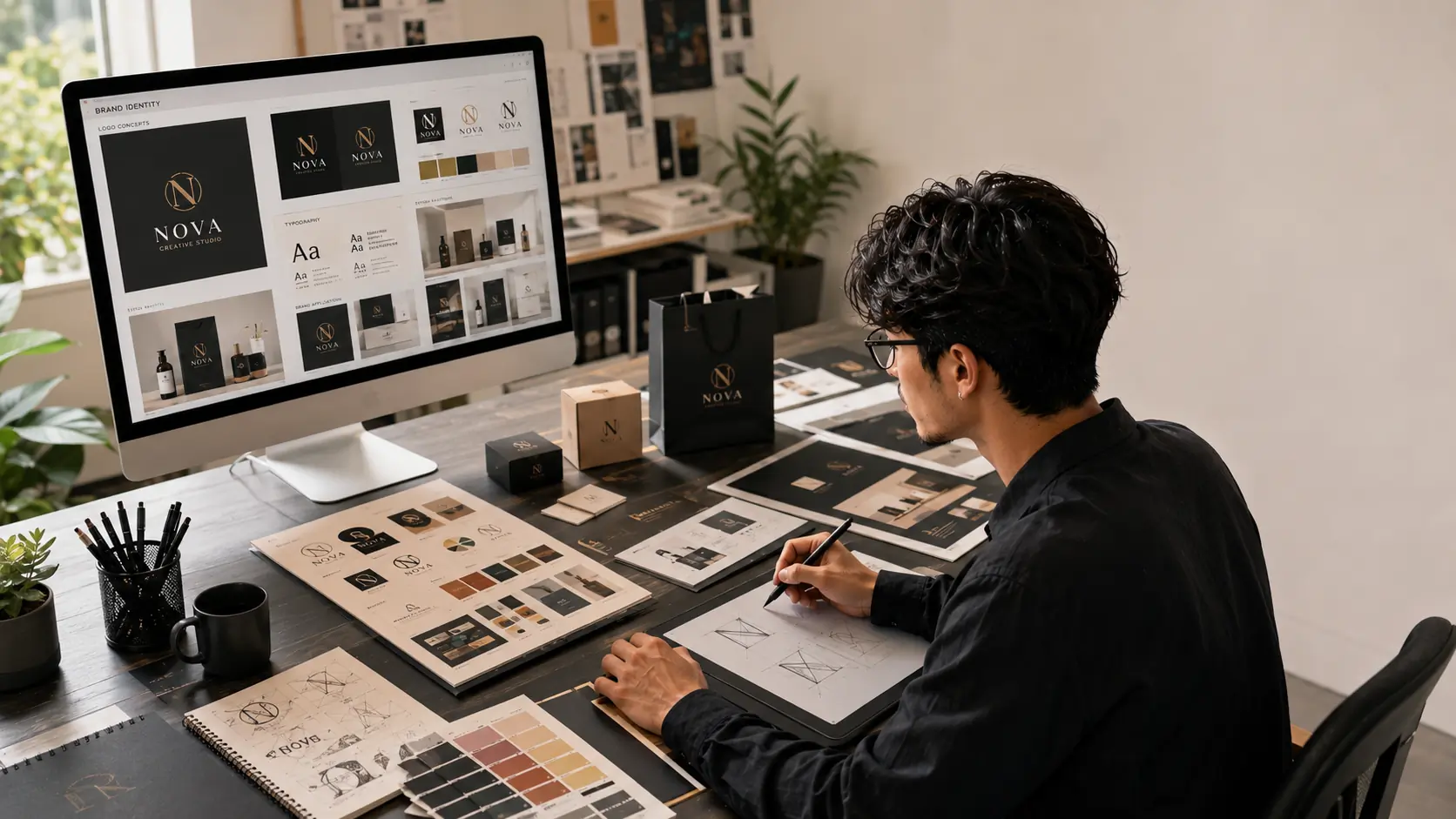
Branding & Visual Identity Design
Building an identity: marks and logotypes, colour and type systems, visual tone of voice, and the guidelines that keep it consistent.
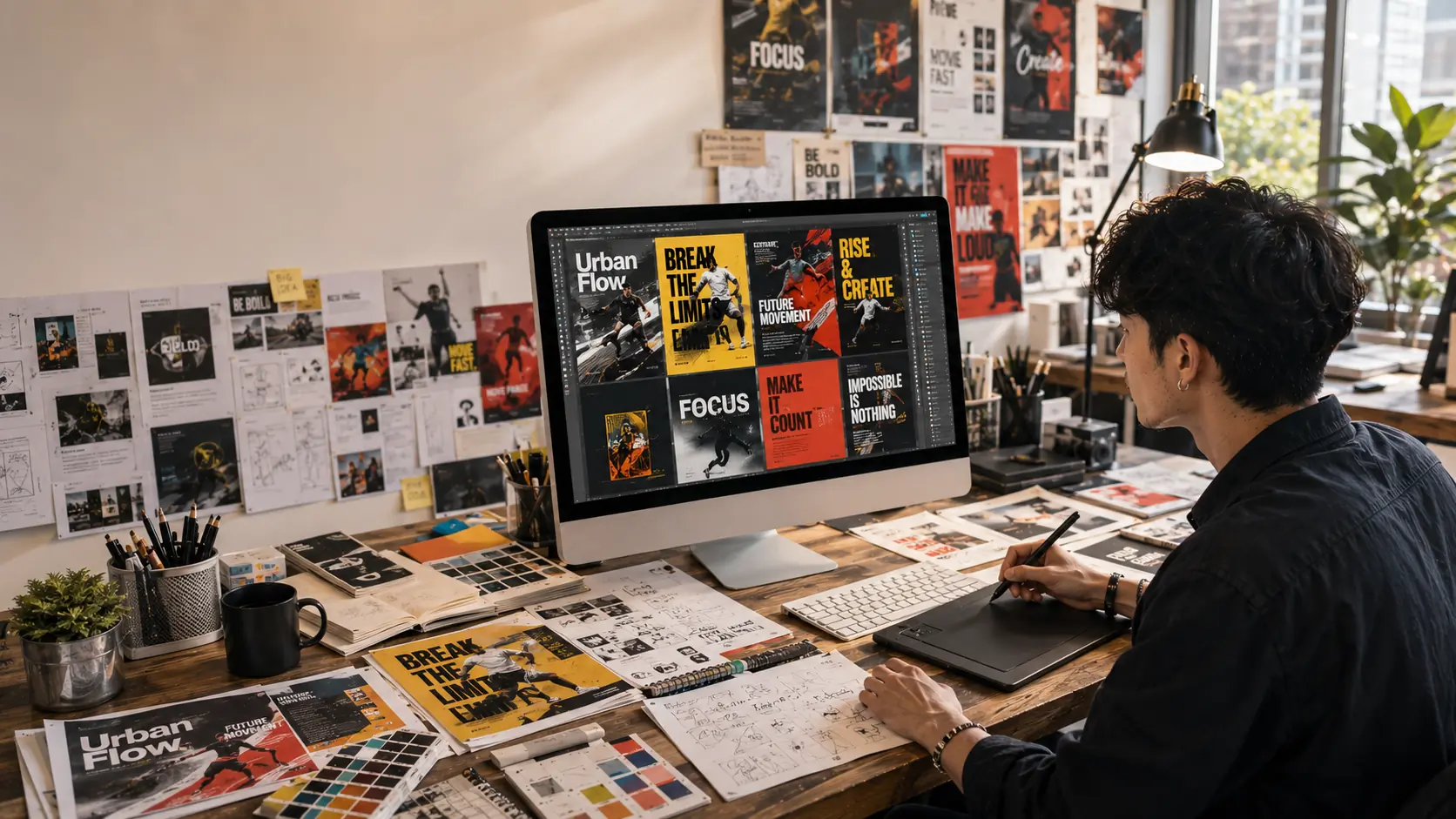
Poster & Advertising Art
Single-image persuasion: focal point, scale, contrast, image and copy working together, and designs that read from across a room.

Creative Content Design For Digital Media
Designing for screens: social formats, motion-ready layouts, thumbnails and banners, and carrying one idea across many sizes.
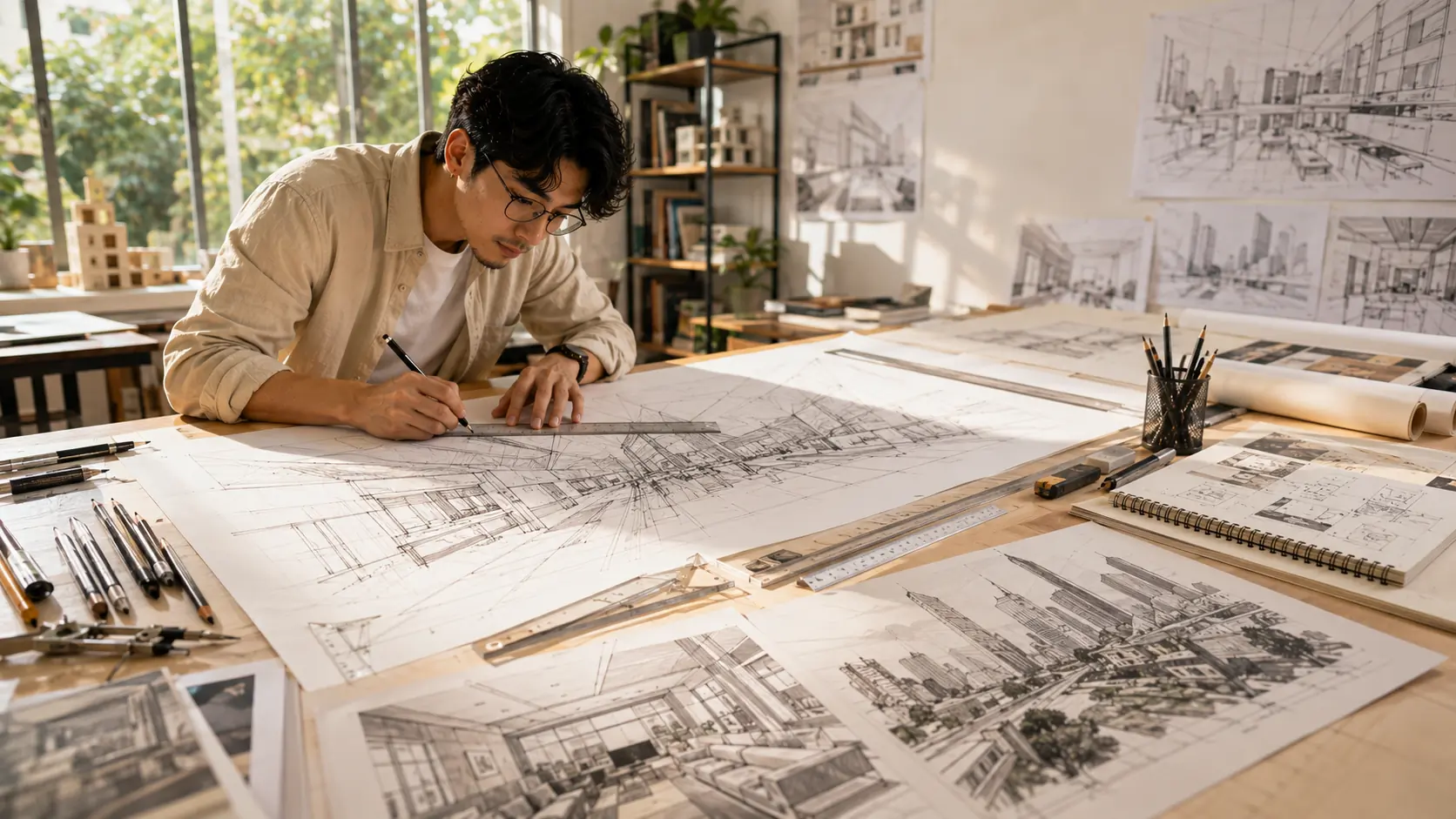
Perspective Drawing & Architectural Sketching
One-, two- and three-point perspective, constructed form, ellipses, and sketching buildings and interiors that sit correctly in space.
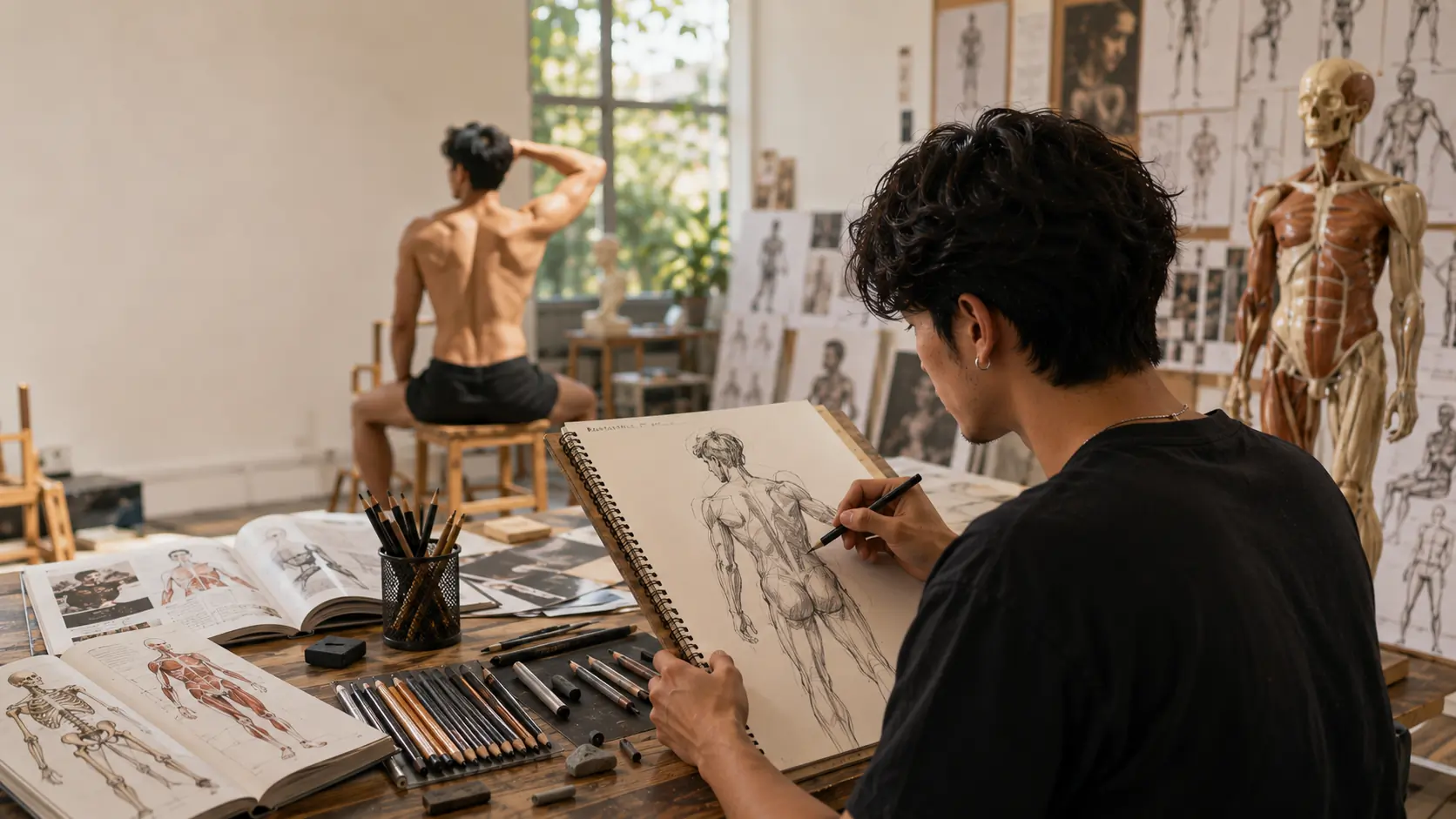
Figure Drawing & Human Anatomy
The figure from the inside out: skeleton, muscle groups, gesture, proportion and foreshortening.
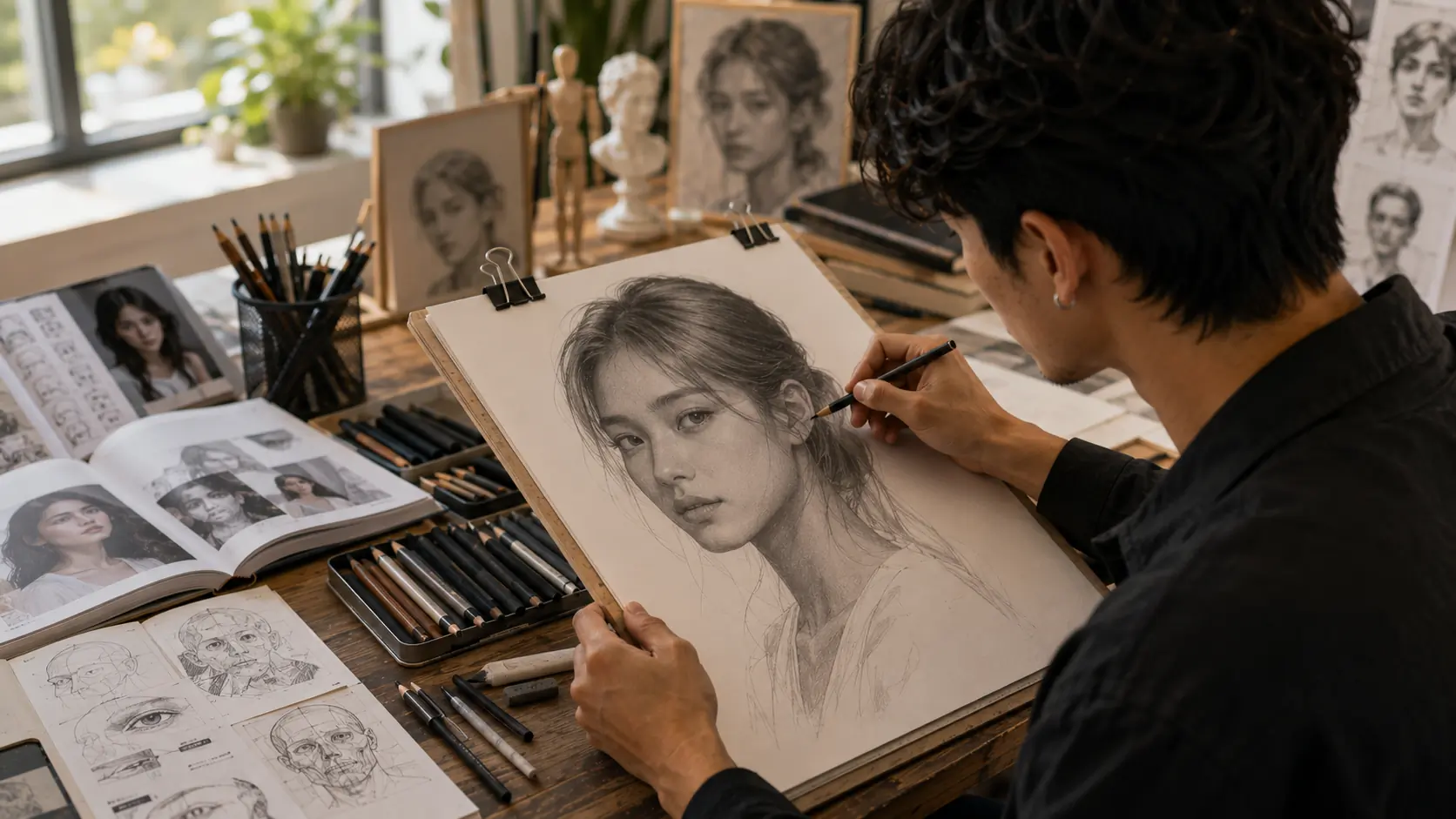
Portrait Drawing & Realistic Rendering
Likeness and surface: skull structure, feature placement, the planes of the face, and rendering skin, hair and eyes convincingly.
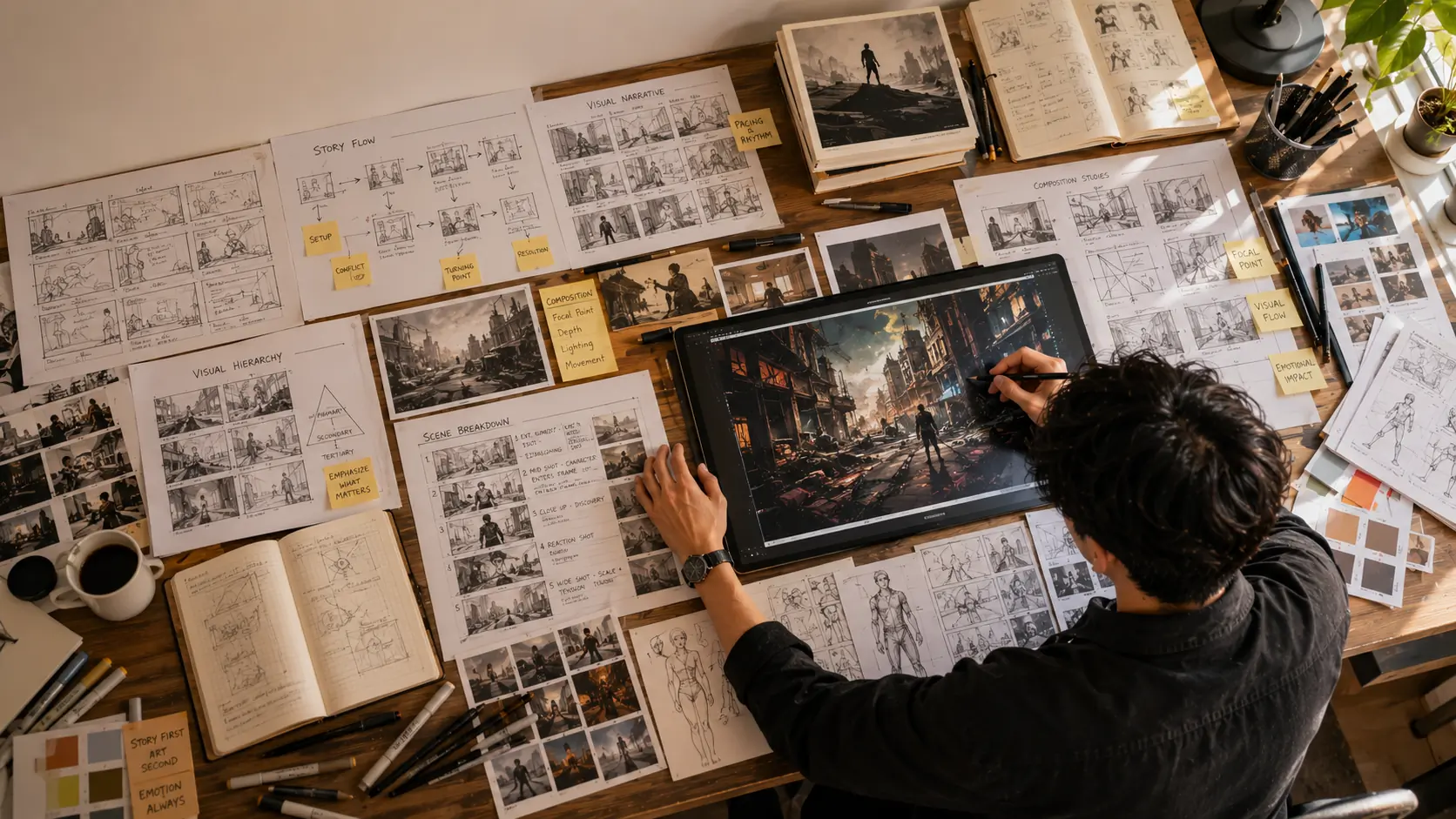
Advanced Composition & Visual Storytelling
How a picture is arranged to be read: focal hierarchy, movement, negative space, value structure and the choices that give an image meaning.